
What a coal mine taught him about natural capital - and why markets matter for biodiversity: An interview with our CEO Dr Karel Nolles
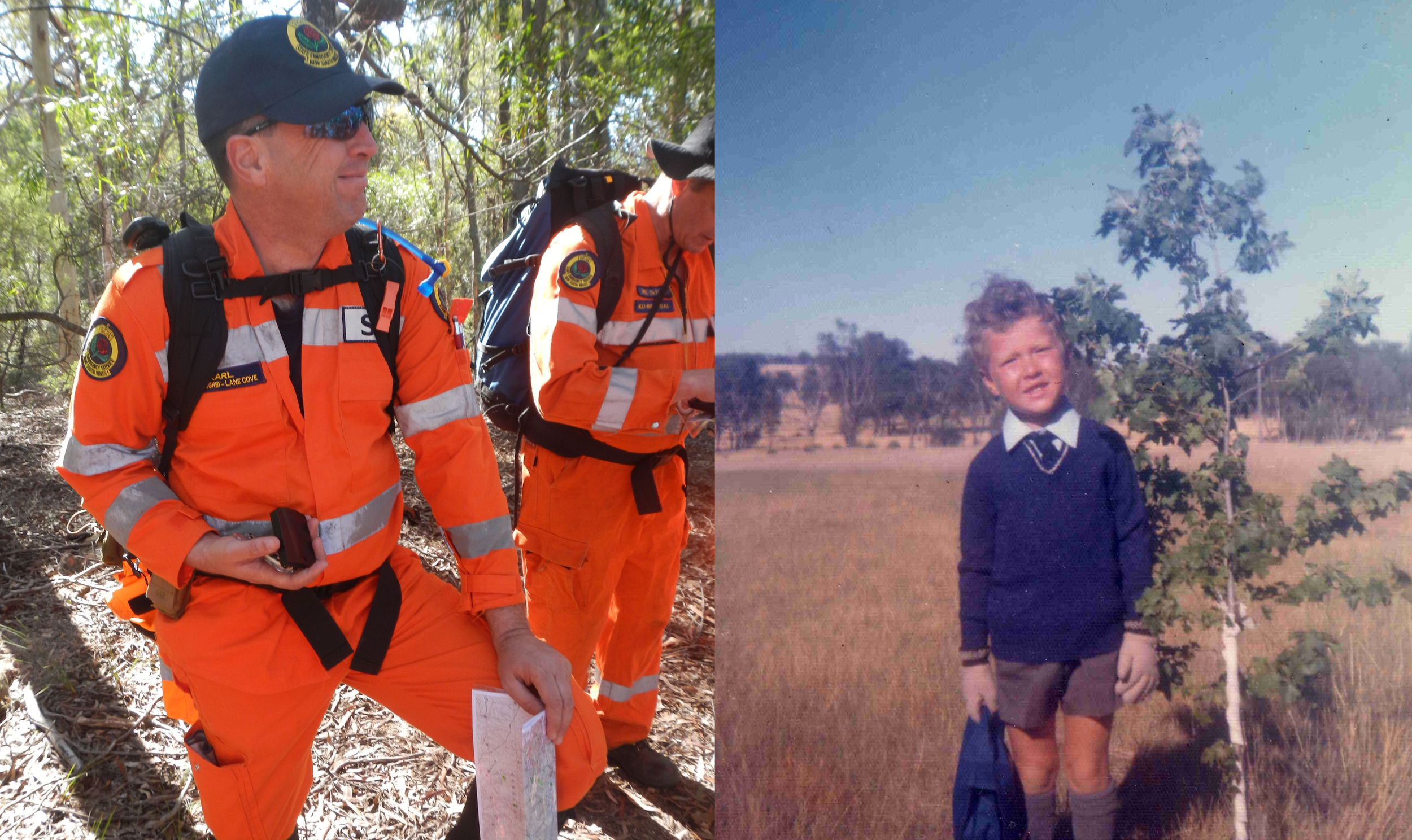
Tell us a bit about your background and how you came to launch Skjander?
By very original training I was an electrical engineer and one of my first roles was as a cadet engineer in an underground coal mine in central Queensland. I came away from that experience with two things: a 1980 Honda CX500 motorcycle (bought with my first pay, and which I still own, albeit completely remodelled) and a life-long distaste for coal. I thought there must be a better way to run an advanced technological civilisation than digging black stuff out of the ground, burning it and throwing the results into the air. From there on everything in my career had a green tinge to it. After I graduated my first engineering job was as an energy efficiency engineer with Energetics, and I spent some years in factories and power stations looking at how to make them more efficient, in Australia and South-East Asia.
By around 1995 the first glimmerings of carbon-markets were starting and, with some friends, I made the attempt at launching one of the first carbon funds in Australia. Ultimately we didn’t succeed commercially but was an enormous success in terms of generating learnings, and led to me completing my PhD in energy economics at the UNSW. I was lucky enough to be accepted as a visiting scholar with the Nobel Prize winning Interdisciplinary Centre for Economic Science at George Mason Uni in Washington DC, and spent a couple of years looking at all the ways that governments can use (or can fail to use well) markets to deliver public policy, particularly in water, renewable energy and electricity.
By 2007 was a founding academic director at the University of New South Wales Centre for Energy and Environmental Markets as was publishing academic papers on the design of carbon, electricity and renewables markets. In this guise I was giving a public lecture one evening about these markets and someone came up and said “I work at Macquarie Capital, we’re setting up an environmental finance team, you should come talk to us” and I found myself as a director in the Macquarie Capital “Renewables and Climate Change” business shortly after, and spent seven years working on investment deals and advisory across energy and environmental markets. It was an extraordinary opportunity where I saw how it is possible to really move the needle on environmental issues if you can work out how to make it commercial for investment to flow.
More recently I set up a boutique consultancy and was engaged by the NSW Government on various environmental finance projects. This is where I met co-founder Dr Liz Heagney. Liz and we both thought that scaling the biodiversity credits market was key to ensuring that the state’s biodiversity was well-protected and we saw a much bigger role for an investment fund to complete the landscape of players required for effective conservation markets. That is where Skjander was born.
What is your role at Skjander and what do you spend your days on?
As CEO, my role is to sit at the intersection of investors, strategy and execution. My responsibility is to ensure the organisation has the structure, capability and resources it needs to deliver on what we promise: making it possible to invest at scale in biodiversity in a way that is both credible and commercially viable.
At the moment, whilst we’re deep in fund implementation, a lot of my time is spent setting commercial strategy, speaking with investors, and working with our legal team on the fund documentation, our marketing team on how we build awareness of the business, and the portfolio/operations team to ensure we can actually do the purchases and sales when the time comes. We’re very lucky as an organisation to have a lot of highly experienced and high-profile people involved, and part of my role is making sure all of that expertise pulls in the same direction.
Why is biodiversity and the environment important to you personally?
I grew up on a farm in rural NSW and thought nothing of being surrounded by trees and space and clean air. It wasn’t until many years later, after working in mining and after living in several megacities in Asia that I realised just how fortunate I had been. Seeing the rate of loss of biodiversity (and other environmental issues) made me concerned that we had to find a way to allow for continuing economic growth to give people an increasing quality of life, whilst also protecting the natural capital that ultimately supports everything we do.
Why do you think nature markets are controversial amongst sustainability professionals?
I’m not sure that they are that controversial - most people recognise that tradeoffs between different goals often need to be made in anything. Markets can provide an efficient way of allocating scarce resources and putting a price on something is often an effective way of stopping it from being wasted.
Fundamental changes may be required to preserve biodiversity but if we use strong arm or command and control-style mechanisms, it will present profound challenges to democracy and social cohesion. Providing a way for people to make a profit is historically a better way of actually achieving outcomes.
What do you wish more people understood about biodiversity?
Our focus on climate change and emissions has meant that biodiversity loss, which I believe to be a much more pressing issue, has not had the attention paid to it that it deserves. As an example, those of us old enough to remember going for a drive in the country in the 1970’s would remember that the car windshield would routinely be covered in insects. This doesn’t happen anymore. And that reduction in insects has a profound impact on natural systems and ecosystem services. We've already lost 83% of wild mammals and around half of all plant species. One way or another, this cannot continue.
How does Skjander’s work directly contribute to biodiversity outcomes?
Skjander exists to make investing (to achieve a commercial return) into biodiversity as easy as investing into any other asset class. And if you make something easy to do, you get more of it done.
What do you hope the long-term impact of Skjander will be 5, 10, 20 years from now?
I would like to think of Skjander as a pioneer in making investing into, and protecting, biodiversity as simple and routine as investing into any other alternative asset class, and that our impact will be not only the direct impact of our own funds, but also that we’ve inspired an industry of other funds to enter into the sector. There is plenty of scope for funds to operate - conservative estimates suggest that total global investment into the sector needs to be in the order of a trillion (Australian) dollars annually. As much as we’d love to, we won’t be able to do that alone.
